What does it look like to work on a project when it is no longer a textbook problem, but you need to independently define the problem and come up with a solution that works in real-world conditions? In this lecture, we will share our experiences from projects and competitions in the fields of computer vision, neural networks, and image processing, from the perspective of students at the School of Electrical Engineering (ETF).
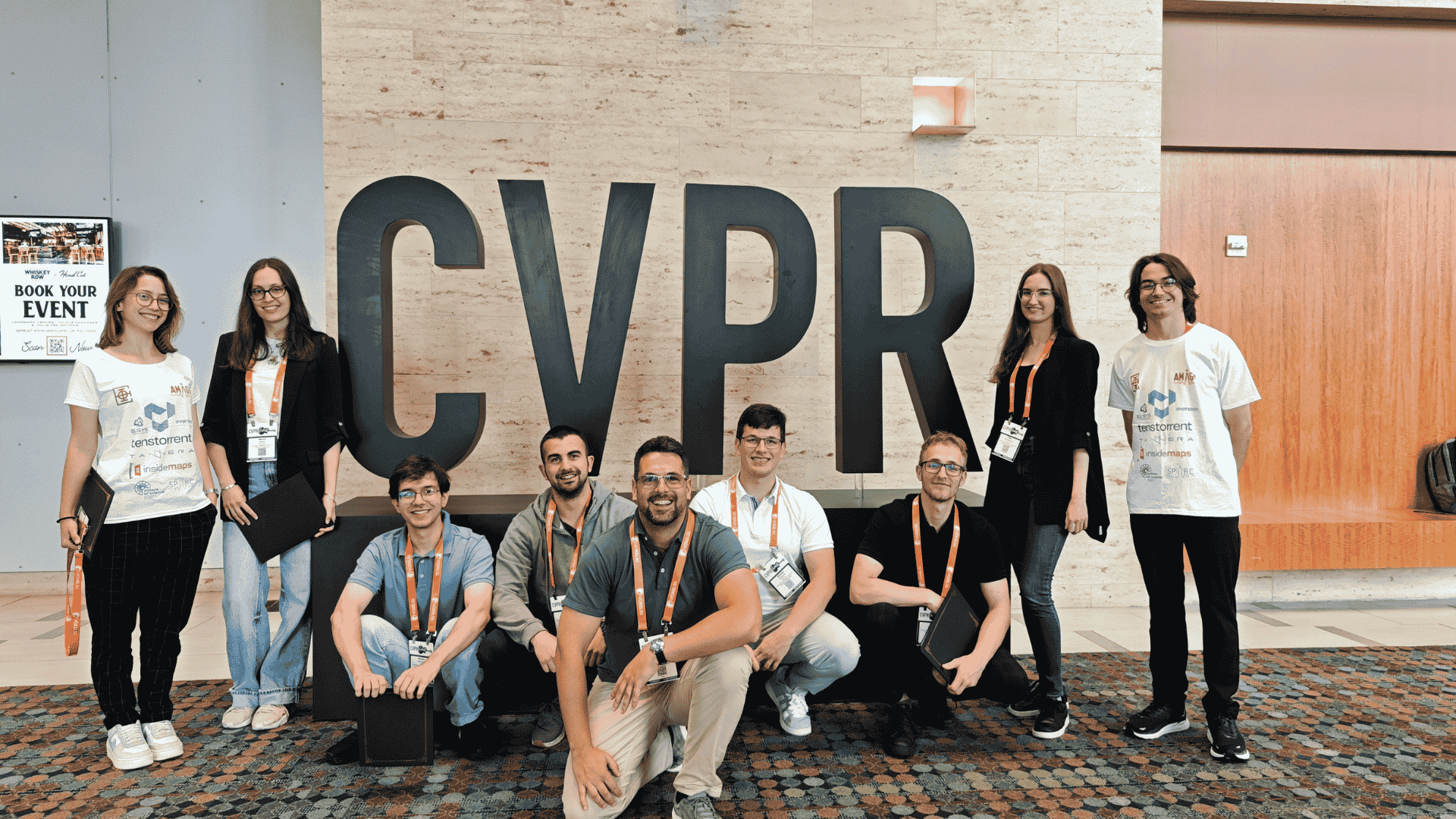
Our team, ETF Amigo, as part of the Center for Hardware Signal Processing, won third place last year at the international Low-Power Computer Vision competition. We worked on image classification under varying lighting conditions on devices with limited resources, specifically on a mobile phone processor. Thanks to this achievement, we were invited to one of the world’s leading conferences in computer vision – CVPR.
After that, with a slightly different team composition, we participated in the Bosch Future Mobility Challenge, a competition focused on developing solutions for autonomous driving of a car model. The challenge required detecting lanes, recognizing traffic signs, and responding appropriately to various traffic situations – all in real-time and on relatively modest hardware.
During the lecture, we will discuss the challenges we faced in competitions, in organizing our work, as well as in technically analyzing problems and exploring existing solutions. We will also talk about how we applied the knowledge gained at ETF from courses such as digital image processing, machine vision, and neural networks, among many others. The lecture is intended for high school and university students.