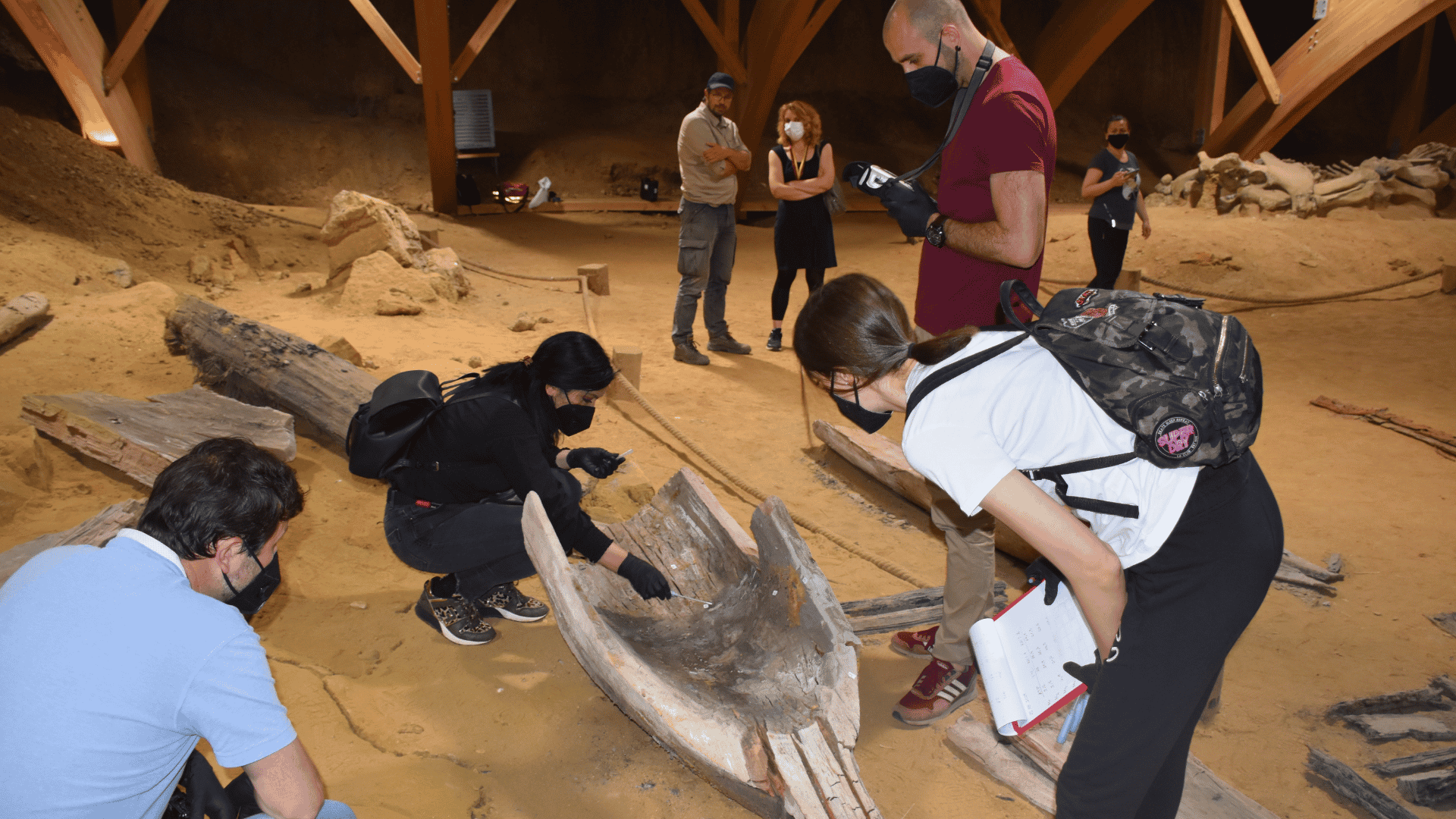
When we think of microorganisms, we usually think of something that needs to be removed. Fungi and bacteria can indeed threaten easel and wall paintings, sculptures, stone monuments and historic buildings. But are all microorganisms harmful? What if some of them could help preserve the things we value?
Throughout September, as the Palace of Science explores cultural heritage and its journey between the past and the future, we will turn our attention to the invisible world of microorganisms that inhabit heritage objects. Some contribute to their deterioration, while others can help protect them. Certain microorganisms can help remove harmful deposits, while others may contribute to the consolidation of microscopic cracks in stone. This is why scientists are investigating beneficial bacteria as a natural alternative to synthetic biocides—both for controlling fungi that damage cultural heritage and for consolidating microcracks.
To mark International Microorganism Day on 17 September, mycologist Assistant Professor Nikola Unković, PhD, from the Faculty of Biology, University of Belgrade, will discuss innovative ways in which microbiology can help us preserve what has been entrusted to our care.
As part of the PROTECTA project and other national and international research projects, Dr Unković and his team are exploring the use of beneficial bacteria to protect cultural heritage and control fungi that cause damage.
Research such as this may make the future of conservation look different from how we imagine it today. Sometimes, the very organisms from which we seek to protect our heritage can also help us preserve it.
Admission is free and registration is not required.