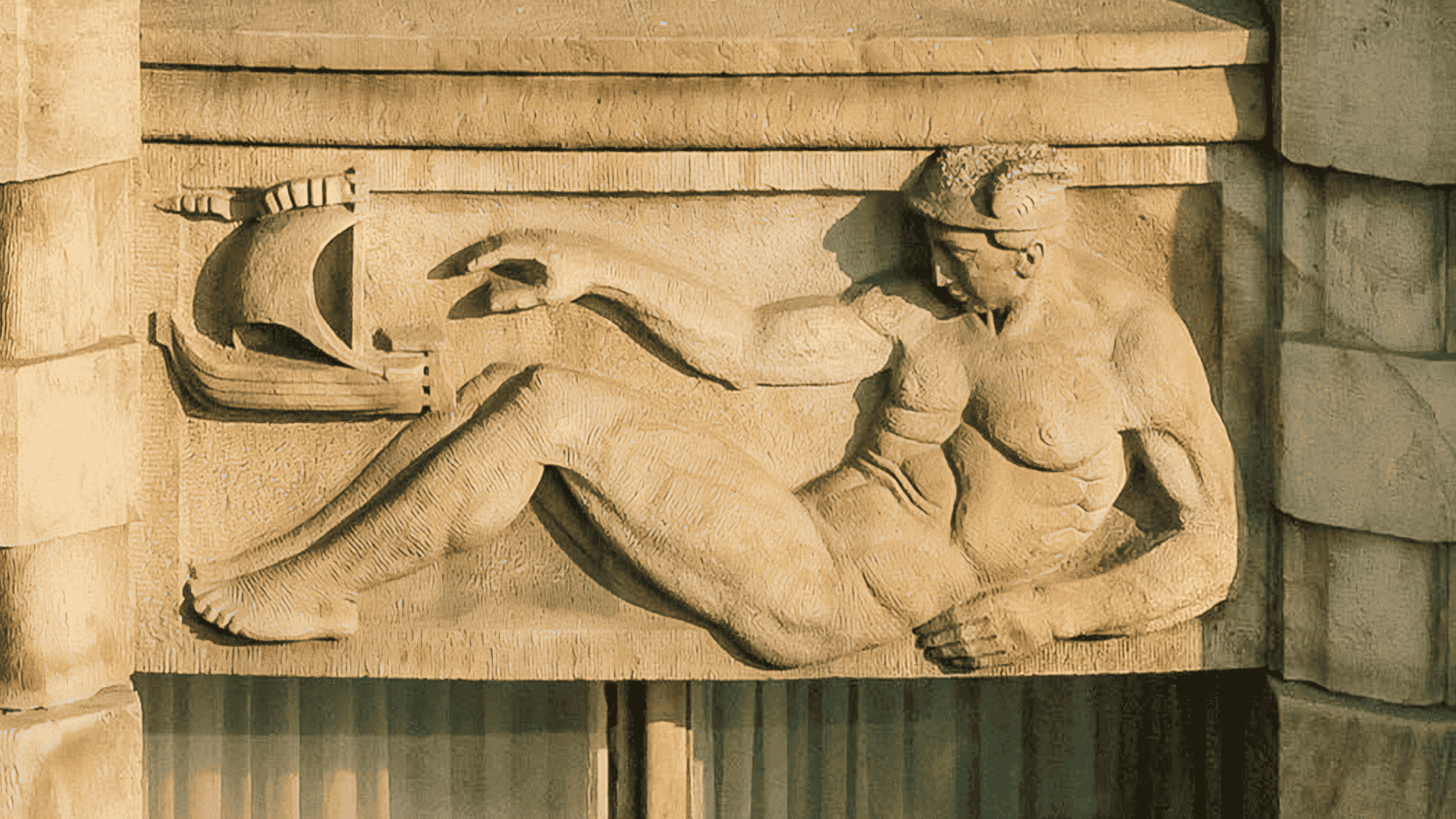
How many times have you walked past the Palace of Science without truly seeing its façade? Deities, sirens, fish, seahorses, monumental figures at the top of the building… An entire world lives on its façade, one that can easily go unnoticed as we hurry along our way. But why are they there? What do they represent? Why would a bank decorate its headquarters with motifs from ancient mythology? Was such splendor merely a matter of aesthetics, or was it meant to convey a message?
In September, a month dedicated to cultural heritage, Lidija Milovanović Ham, curator of the Collection of Yugoslav Sculpture at the National Museum of Serbia, will take us on a slightly different tour of the Palace of Science. We will come to know it through the sculptures and relief decoration that adorn both its exterior and its interior. When we know what we are looking at, the same building suddenly appears entirely different. Perhaps after this guided expert tour, the next time you walk down Kralja Milana Street, you will look upwards first.
The lavish façade and interior of the former Adriatic-Danube Bank were conceived from the outset as much more than architectural decoration. Architecture, sculpture, mythology and symbolism come together in them to tell a story about the time in which the building was created and about the aspirations of its investors. On the palace façade, we encounter an entire world of ancient deities and mythical beings: Hermes, Poseidon, Aphrodite, Apollo, sirens, seahorses and other creatures that seem to have emerged from an unusual stone pantheon. A special part of this sculptural program consists of medallions personifying maritime trade, agriculture, industry and commerce. Some of the most important sculptors of the Yugoslav interwar period, Lojze Dolinar and Toma Rosandić, took part in creating this rich sculptural program, while inside the palace the sculpture of Aphrodite, the work of Petar Palavičini, received a special place of its own. But why Aphrodite in particular? Hermes? Why Poseidon and an entire series of marine motifs on the building of a bank? And what do all these figures tell us about the people who envisioned and built this palace?
Together, we will look at what we may see every day but fail to notice: figures, reliefs and details that once had their own meaning and today represent a precious part of Belgrade’s artistic and architectural heritage. Because cultural heritage is not only what we have inherited. It is what we have chosen to recognize, understand, value and preserve.